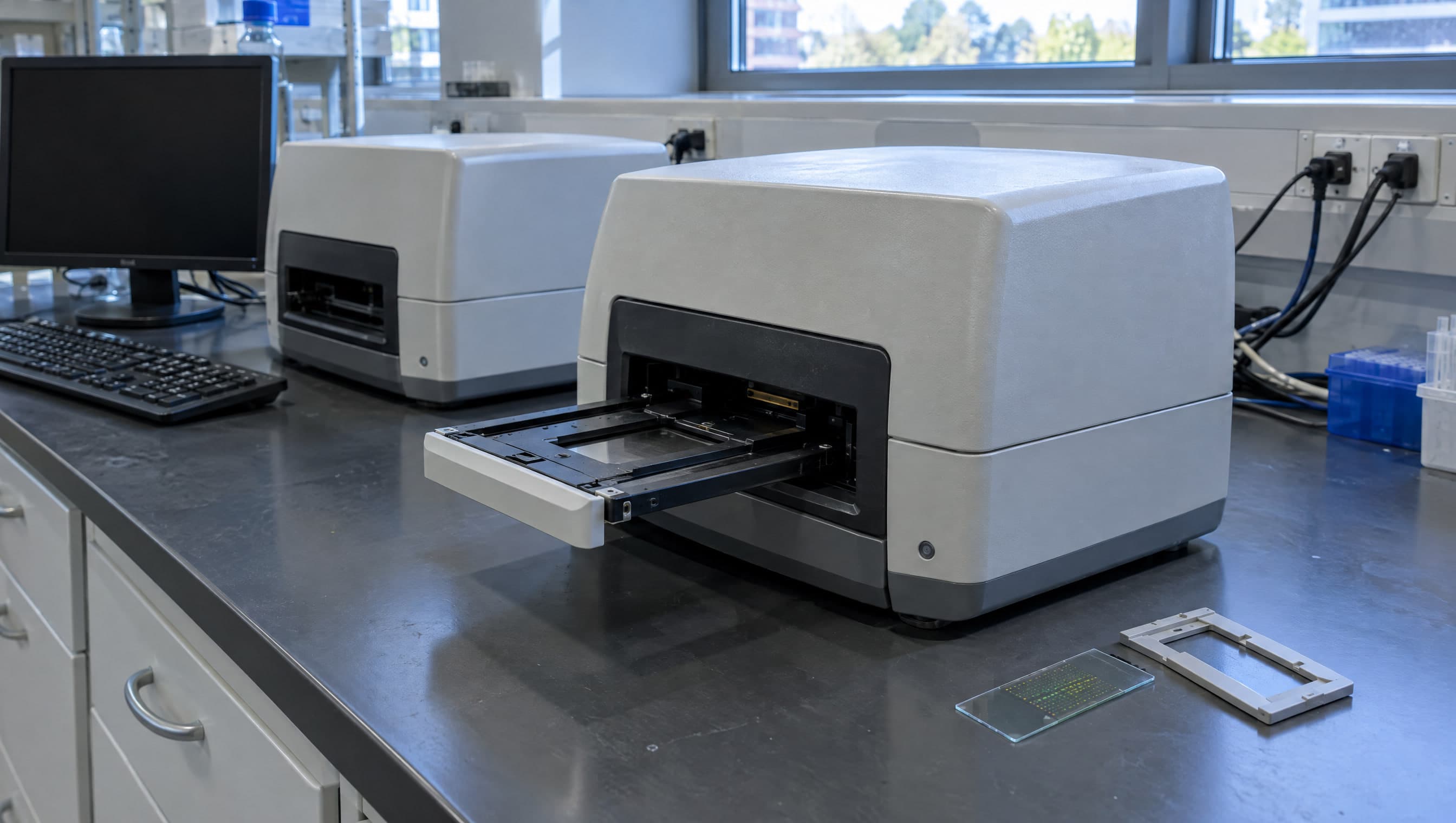


Cancer Cell Visualization
Advanced Cancer Risk Assessment

GeneCancerHereditary Risk Analysis

Comprehensive genetic testing analyzing 108+ genes associated with hereditary cancer syndromes. Get personalized screening recommendations and evidence-based prevention strategies.

BRCA1/2 TestingLynch SyndromeColorectal CancerProstate CancerMelanomaPancreatic Cancer
CLIA Certified Lab
HIPAA Compliant
CAP Accredited
Explore
Comprehensive Analysis

What's Tested

Comprehensive analysis of genes associated with hereditary cancer syndromes covering 15+ cancer types

12 genes

Breast & Ovarian Cancer

BRCA1, BRCA2, PALB2, ATM, CHEK2, RAD51C, RAD51D

8 genes

Lynch Syndrome

MLH1, MSH2, MSH6, PMS2, EPCAM

5 genes

Li-Fraumeni Syndrome

TP53, PTEN, CDH1

14 genes

Colorectal Cancer

APC, MUTYH, POLD1, POLE, BMPR1A, SMAD4

8 genes

Prostate Cancer

HOXB13, BRCA1, BRCA2, ATM, CHEK2

7 genes

Melanoma & Skin

CDKN2A, CDK4, BAP1, MC1R, MITF

Scientific Process

How Screening Works

Our multi-step laboratory process ensures the highest accuracy and most comprehensive cancer risk analysis available

Step 1

DNA Extraction & Sequencing

Your saliva sample undergoes DNA extraction using magnetic bead-based purification. We then perform next-generation sequencing (NGS) to read your entire genetic code with ultra-high accuracy.

Illumina NovaSeq 6000 platform
Step 2

Variant Detection & Classification

Our bioinformatics pipeline identifies genetic variants across 108+ cancer-associated genes. Each variant is classified using ACMG/AMP guidelines as pathogenic, likely pathogenic, VUS, or benign.

ACMG/AMP 5-tier classification
Step 3

Risk Calculation & Modeling

Using validated risk models (Tyrer-Cuzick, BOADICEA, PREMM5), we calculate your personalized lifetime cancer risk for each cancer type based on your genetic profile and family history.

Validated risk prediction models
Step 4

Clinical Report Generation

Board-certified geneticists review all findings and generate a comprehensive report with personalized screening schedules, prevention strategies, and family implications.

Reviewed by MD geneticists

Why Choose GeneCancer

Comprehensive genetic insights for proactive cancer prevention and early detection

90%+
Early detection survival rate

Early Detection Saves Lives

Hereditary cancers detected early have survival rates exceeding 90%. Knowing your genetic risk enables proactive screening years before symptoms appear, catching cancer at its most treatable stage.

6+
Screening types covered

Personalized Screening Schedule

Receive a customized surveillance plan tailored to your specific genetic variants. Know exactly which screenings you need, how often, and when to start — eliminating guesswork from cancer prevention.

50%
Chance relatives carry variant

Protect Your Family

Hereditary cancer variants follow autosomal dominant inheritance — each first-degree relative has a 50% chance of carrying the same variant. Your results empower your entire family to take action.

3x
Better treatment response

Targeted Treatment Options

Certain genetic variants respond better to specific therapies. BRCA-positive cancers may benefit from PARP inhibitors, while Lynch syndrome tumors often respond well to immunotherapy.

108+
Genes comprehensively tested

Peace of Mind & Empowerment

Replace uncertainty with knowledge. Whether your results show elevated risk or average risk, you gain the power to make informed decisions about your health and your family's future.

15+
Prevention strategies

Evidence-Based Prevention

Receive actionable prevention strategies including lifestyle modifications, chemoprevention options, and risk-reducing surgical considerations — all backed by the latest clinical research.

Pricing Plans

Choose YourProtection Plan

Select the cancer screening package that best fits your health goals and family needs

MonthlyAnnualSave 20%

Essential

$125 one-time kit fee

$69/month
  • GeneCancer screening panel
  • BRCA1/2 analysis
  • Basic hereditary risk report
  • Digital report access
  • Email support
  • Screening recommendations
Most Popular

Premium

$125 one-time kit fee

$89/month
  • Everything in Essential +
  • 108+ cancer gene analysis
  • Lynch Syndrome testing
  • Detailed screening plan
  • Family risk assessment
  • Genetic counselor consultation
  • Priority 48-hour processing
  • Risk comparison report

Family

$125 one-time kit fee

$139/month
  • Everything in Premium +
  • Coverage for up to 4 people
  • Bi-annual screening for all
  • Family genetic risk mapping
  • Shared family dashboard
  • Dedicated account manager
  • Lifetime report updates
  • Prevention plan monitoring
HIPAA Compliant
256-bit Encryption
30-Day Money Back
24/7 Support
Real Sample Data

Sample Report

Explore a real GeneCancer report with comprehensive cancer risk analysis and personalized recommendations

Report ID: GC-2024-789456

Sample Report — For Demonstration Purposes

Report Date
2024-01-15
Sample Collected
2023-12-28
Lab ID
LAB-GC-45678
Ethnicity
European
108
Genes Analyzed
12
Variants Detected
3
Elevated Risk
5
Moderate Risk
8
Actionable Insights

Breast & Ovarian

Overall Risk:
Elevated
BRCA1
Variant: c.5266dupC
RS ID: rs80357906
Genotype: Heterozygous
High Impact
Pathogenic variant in BRCA1 gene significantly increases lifetime risk of breast cancer (up to 72%) and ovarian cancer (up to 44%). This variant disrupts DNA repair mechanisms.
Recommendation
Enhanced screening protocol recommended: Annual breast MRI starting age 25-30, mammography starting age 30, consider risk-reducing strategies. Genetic counseling strongly advised for family planning.
PALB2
Variant: c.3113G>A
RS ID: rs45551636
Genotype: Heterozygous
Moderate Impact
Likely pathogenic variant in PALB2 gene associated with 2-4x increased breast cancer risk. PALB2 partners with BRCA2 in DNA repair.
Recommendation
Annual mammography and clinical breast exams starting age 30. Consider supplemental breast MRI screening. Discuss with oncologist regarding preventive options.
ATM
Variant: c.5762-1050A>G
RS ID: rs1801516
Genotype: Heterozygous
Low-Moderate Impact
Variant of uncertain significance in ATM gene. May contribute to moderately increased breast cancer risk (1.5-2x). ATM is involved in cell cycle checkpoint control.
Recommendation
Standard screening with annual mammography starting age 40, or 10 years before earliest family diagnosis. Monitor research updates on this variant.

Screening Recommendations

Breast Cancer
Annual MRI age 25-30, Annual mammography age 30+
Starting age: 25-30 years
Ovarian Cancer
Transvaginal ultrasound + CA-125 every 6 months
Starting age: 30-35 years
Colorectal Cancer
Colonoscopy every 1-2 years
Starting age: 10-12 years (APC), 20-25 years (Lynch)
Prostate Cancer
PSA + DRE annually
Starting age: 40 years

Cancer Risk Comparison

Breast Cancer
Population:
12.5%
Your Risk:
45-72%
Ovarian Cancer
Population:
1.3%
Your Risk:
25-44%
Colorectal Cancer
Population:
4.3%
Your Risk:
70-90%
Prostate Cancer
Population:
12.5%
Your Risk:
30-40%

Get the Complete Report

Download the full report with all findings, screening recommendations, risk comparisons, and prevention strategies

How It Works

Getting your cancer risk insights is simple and straightforward

1

Order Your Kit

Select your package and receive your DNA collection kit within 2-3 business days

2

Collect Sample

Simple saliva collection at home — takes less than 2 minutes with our easy kit

3

Mail It Back

Use the prepaid shipping label to send your sample to our CLIA-certified lab

4

Get Results

Receive your comprehensive cancer risk report with screening recommendations

Frequently Asked Questions

Everything you need to know about GeneCancer

GeneCancer is recommended for individuals with a family history of cancer, multiple cancer diagnoses in the family, cancer at young ages, or specific cancer types like breast, ovarian, or colorectal cancer. It’s also valuable for anyone wanting proactive insight into their hereditary cancer risk.
We analyze 108+ genes including BRCA1, BRCA2, PALB2, ATM, CHEK2, Lynch syndrome genes (MLH1, MSH2, MSH6, PMS2), TP53, PTEN, APC, CDKN2A, STK11, and many others associated with hereditary cancer syndromes covering 15+ cancer types.
Our test has 99.9% analytical accuracy and is performed in CLIA-certified, CAP-accredited laboratories using Illumina next-generation sequencing technology. All results are reviewed by board-certified geneticists before release.
Many insurance plans cover genetic testing for individuals who meet specific criteria (family history, personal cancer history). We provide detailed documentation to help with insurance reimbursement and our team can help verify your coverage.
A positive result means you have an increased risk for certain cancers. You’ll receive personalized screening recommendations, prevention strategies, and can consult with a genetic counselor. Many hereditary cancers are highly preventable with proper surveillance.
We use 256-bit encryption for all data transmission and storage. Your genetic information is never shared with third parties without explicit consent. We are fully HIPAA and GDPR compliant, and you can request data deletion at any time.

Take Control of Your Cancer Risk

Early detection and prevention can save lives. Join thousands who have taken the first step toward proactive cancer prevention.

30-Day Guarantee
Free Shipping
24/7 Support

Cookie & Privacy Preferences

HIPAA GDPR

We use cookies to ensure our website functions securely and to improve your experience. As a healthcare provider handling sensitive genetic data, we adhere to strict HIPAA and GDPR standards. No personal health information (PHI) is ever stored in cookies. You can customize your preferences below.

Privacy Policy