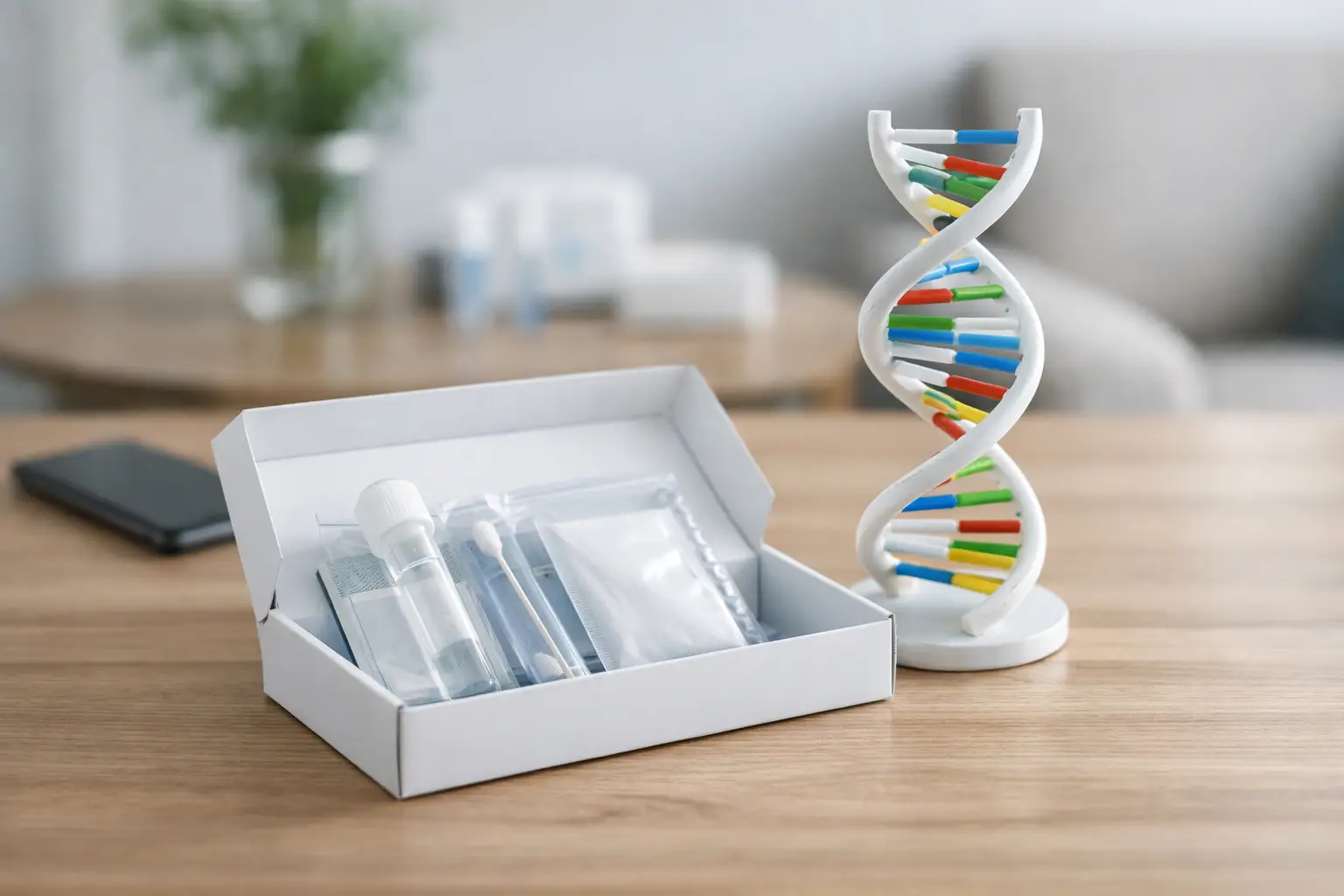
At-home DNA testing can look simple on the surface - order a kit, send a sample, get results. The real question is whether those results are useful enough to guide a health decision. That is where a serious guide to at home DNA testing needs to go beyond marketing claims and focus on clinical quality, privacy, and what the data can actually tell you.
What at-home DNA testing can actually do
At-home DNA testing is not one category. Some kits are built for ancestry or general wellness, while others are designed to support medical decisions in areas like hereditary cancer risk, medication response, or targeted health screening. If you start with the wrong category, the result may be interesting but not actionable.
For health-focused consumers, the most valuable tests usually answer a specific question. You may want to know whether you carry inherited cancer risk variants, whether certain medications are more or less likely to work well for you, or whether your genetics suggest elevated risk in a defined area. Broad promises about optimizing your life are less useful than a clearly defined test purpose.
That distinction matters because not all DNA findings carry the same weight. A recreational report may highlight tendencies or associations. A clinically grounded report is more likely to focus on validated genes, established evidence, and results that can be discussed with a physician or used in care planning.
A guide to at-home DNA testing starts with the right test type
If you are comparing options, begin by identifying what decision you are trying to make. That usually places you into one of several categories.
Hereditary cancer testing is best suited for people with a personal or family history of cancer, or those who want proactive risk information based on known cancer-related genes. In this setting, panel design matters. A limited screen may miss relevant variants, while a more comprehensive panel can provide broader risk visibility.
Pharmacogenomics testing looks at how your genes may affect medication metabolism and response. This is particularly relevant in psychiatry, pain management, cardiology, and other areas where medication selection can involve trial and error. If your goal is to reduce adverse effects or improve prescribing precision, this is a very different test from a wellness profile.
General health and wellness DNA testing can include nutrigenomics, fitness, stress response, and related traits. These tests can be useful for behavior change and personalization, but they should be interpreted with appropriate caution. They are usually best used as directional input rather than standalone medical guidance.
Pediatric and family-focused testing can also be appropriate in specific contexts, especially when parents are seeking early insight into inherited risks. Here, the threshold for credibility should be even higher, because the results may shape long-term health planning.
What to look for in a credible provider
A strong at-home testing experience depends less on the collection kit and more on the laboratory, the reporting framework, and the company behind it. Many kits look similar online. The differences show up in how samples are processed, how results are interpreted, and whether the final report is medically meaningful.
Start with the lab standard. For health-related DNA testing, CLIA-certified processing is one of the clearest trust signals. It indicates the lab operates under established quality standards used in clinical testing. Without that baseline, the result may not offer the level of reliability most patients and clinicians expect.
Privacy is equally important. Your genetic data is sensitive health information, not just another consumer data point. Look for HIPAA-compliant processes, clear consent language, and transparent policies on data storage, use, and sharing. If a provider is vague about privacy, that is not a minor issue.
Turnaround time also matters, but speed should not come at the expense of rigor. Fast reporting can be valuable, especially when genetic insight may affect treatment decisions. Still, quick results only help if the analysis is clinically sound and easy to interpret.
A useful report should explain what was tested, what was found, how confident the interpretation is, and what action may be appropriate next. If the output is full of colorful scores but light on evidence, it may be more consumer-friendly than clinically useful.
How accurate are at-home DNA tests?
Accuracy depends on what kind of test you are buying and how the provider defines the result. The raw lab analysis can be highly accurate when performed under strong quality controls. The bigger issue is often interpretation.
For example, identifying a specific variant in a validated gene is different from estimating a general wellness tendency based on multiple weak associations. Both may appear in a DNA report, but they should not be treated as equivalent. Clinical relevance sits on a spectrum.
This is why confirmation, evidence level, and context matter. A hereditary cancer result tied to a well-studied gene carries very different implications than a lifestyle trait score. If you are making decisions about screening, medication, or family risk, choose providers that emphasize clinically recognized markers and structured reporting.
Sample collection is easy. Choosing well is harder.
Most at-home kits use saliva or a cheek swab. For consumers, that part is straightforward. The harder part is understanding what happens after the sample leaves your home.
The best providers make this process transparent. You should know how to register the kit, how the sample is handled, how long results typically take, and whether support is available if the report raises medical questions. A polished checkout experience is not enough.
It also helps to understand that sample quality can affect the process. If you do not follow instructions closely, you may need to recollect. That is common and not necessarily a red flag, but it does reinforce why operational consistency matters.
Cost, speed, and depth - the real trade-off
A lower-cost test may seem appealing, but price often reflects scope. Some kits screen a small set of markers and return broad lifestyle comments. Others analyze much larger gene panels tied to medical use cases. The right choice depends on what you need the information to do.
If you want medically relevant insight, depth usually matters more than novelty. A hereditary cancer panel with extensive gene coverage or a pharmacogenomics panel that evaluates a wide range of medication-response genes can support more meaningful action than a lightweight consumer report.
Speed also needs context. A five to seven day turnaround can be highly valuable when paired with clinical-grade processing and structured analysis. That combination is one reason companies like Gene Matrix position testing as a practical precision medicine tool rather than a passive consumer product.
Who should consider at-home DNA testing?
This kind of testing is often most useful for people who already have a health question in mind. That includes adults with a family history of breast, ovarian, colorectal, or other inherited cancers, patients who have struggled with medication side effects or inconsistent treatment response, and proactive consumers who want more personalized health planning.
It can also be useful for people who feel stuck in a generalized healthcare model. If your concern has been met with watchful waiting or trial-and-error treatment, genetics can sometimes add a more individualized layer of information. It will not answer every question, but it can reduce uncertainty in the right context.
At the same time, testing is not always necessary. If the result will not change your screening, treatment, or behavior, it may not be the best next step. Good testing should create decision value, not just curiosity.
Common mistakes people make in at-home DNA testing
One common mistake is treating all DNA tests as equally medical. They are not. Another is choosing a test based on branding rather than gene coverage, lab standards, and report quality. Consumers also tend to underestimate privacy considerations until after purchase, when their data is already in the system.
Another issue is overinterpreting wellness results. Genetic predisposition is not destiny, and many health outcomes are shaped by environment, behavior, and clinical history. The strongest use of DNA data is usually in combination with those factors, not in isolation.
Finally, people often buy too broad or too narrow. A broad test may produce noise if you only need one answer. A narrow test may miss useful information if your situation requires a more comprehensive panel. Matching the test to the decision is the key step.
How to choose with confidence
A practical guide to at-home DNA testing comes down to a short set of standards. Know your goal. Verify that the test category matches it. Look for CLIA-certified lab processing, HIPAA-compliant privacy protections, clearly defined gene coverage, medically framed reporting, and realistic turnaround times. Then ask the most important question: what will I do differently if this result is positive, negative, or unclear?
That question keeps the process grounded. The best DNA test is not the one with the boldest claims. It is the one that gives you credible information you can actually use - whether that means earlier screening, smarter prescribing, more informed conversations with your doctor, or simply a clearer next step in your health plan.
Genetic testing works best when it reduces guesswork, not when it adds noise. If you choose with that standard in mind, at-home DNA testing can become a practical part of personalized care rather than just another health report in your inbox.