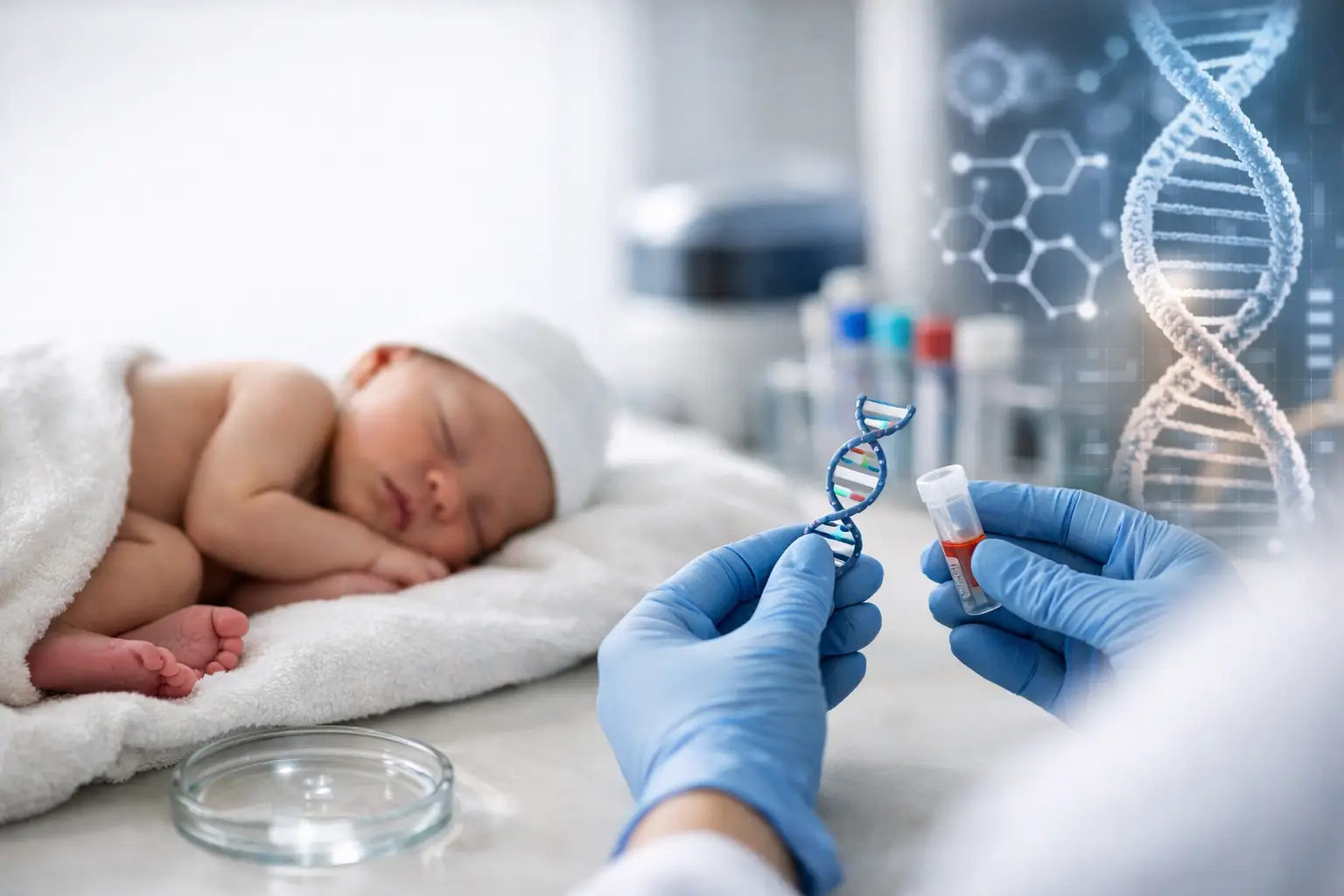
The first days after birth move fast. Parents are learning feeding cues, sleep patterns, and follow-up appointments while clinicians are focused on catching anything that needs attention early. In that setting, understanding newborn DNA screening benefits is less about theory and more about one practical question: can genetic insight help guide care before symptoms appear?
In many cases, the answer is yes - but with important limits. DNA-based newborn screening does not replace pediatric care, physical exams, or standard state newborn screening. What it can do is add another layer of precision, helping identify inherited risks, support earlier monitoring, and reduce the trial-and-error approach that often happens when a condition is only recognized after problems begin.
What newborn DNA screening actually adds
Traditional newborn screening already plays a critical public health role. Shortly after birth, babies are tested for a set of serious but treatable conditions, usually through a heel-prick blood sample and hearing or heart screening. Those programs are highly effective, but they are designed around a fixed list of disorders set by each state.
DNA screening works differently. Instead of looking only for a limited panel of conditions, it analyzes selected genes associated with inherited disease risk. That broader genomic view can reveal predispositions that standard screening may not capture, especially in areas like pediatric metabolic disorders, cardiac risk, immune conditions, or medication sensitivity.
That does not mean more data is always better. The value depends on what is tested, how the results are interpreted, and whether the findings can support a medical decision. For parents, the strongest use case is actionable insight - information that changes monitoring, follow-up, or treatment strategy during infancy or childhood.
The core newborn DNA screening benefits for families
The main clinical advantage is earlier risk detection. Some genetic conditions are present at birth but remain silent until a baby becomes ill, misses developmental milestones, or fails to respond to routine care. If a DNA screen identifies elevated risk before symptoms develop, pediatricians and specialists can watch more closely and intervene sooner.
That timing matters. In genetics, a delay of months can mean the difference between preventive management and reactive treatment. For certain inherited disorders, early dietary changes, medication adjustments, imaging, specialist referral, or developmental support can improve outcomes significantly.
Another of the clearest newborn DNA screening benefits is care personalization. Two infants can show the same symptoms but have very different underlying biology. Genomic information helps narrow that uncertainty. It gives clinicians a better starting point when deciding what to monitor, which referrals to make, and in some cases which medications to avoid or use with more caution.
There is also a family-level benefit. A genetic finding in a newborn may reveal inherited risk that affects siblings, parents, or future pregnancies. That can open the door to cascade testing and more informed family planning. For families with a history of unexplained illness, sudden cardiac events, neurological disorders, or pediatric cancers, that added clarity can be clinically significant.
Newborn DNA screening benefits in real clinical decision-making
The strongest argument for genomic screening is not that it predicts everything. It does not. The strongest argument is that it can make pediatric care more targeted.
Consider a baby with a genetic variant associated with an inherited metabolic condition. Even if the infant appears healthy, that result may justify closer nutritional monitoring and faster specialist involvement if symptoms emerge. Or consider a variant linked to cardiac rhythm disorders. A child may benefit from earlier cardiology evaluation, especially before exposure to certain medications or physical stressors later in childhood.
This is where precision medicine becomes practical. Instead of waiting for a crisis to reveal an underlying issue, providers can build a more informed care plan from the beginning. For parents who value prevention and data-driven healthcare, that is one of the most meaningful newborn DNA screening benefits.
Where the limits matter
Genetic screening is powerful, but it is not absolute. Not every variant causes disease. Not every disease can be predicted by DNA alone. And not every result leads to an immediate action.
Some findings are clearly pathogenic and medically useful. Others fall into a gray area, especially when the evidence is still evolving. This is why test quality, lab standards, and interpretation frameworks matter so much. Poorly curated reports can create confusion instead of clarity.
There is also the question of scope. A narrowly designed pediatric panel focused on well-characterized, high-impact conditions is often more useful than a broad consumer-style screen that returns low-confidence wellness traits. For newborns, the standard should be clinical relevance, not novelty.
Parents should also expect that a normal result does not eliminate all risk. It means no significant findings were identified within the genes and conditions analyzed. That distinction is important and often overlooked.
Why interpretation quality is as important as the test itself
A genetic result without clinical context has limited value. The benefit comes from accurate sequencing, validated reporting, and translation into next steps that a parent and pediatrician can actually use.
That is why screening should be grounded in high-trust operational standards, including CLIA-certified laboratory processes and HIPAA-compliant data handling. Speed matters too, especially when the goal is early intervention. Long wait times reduce the practical value of a time-sensitive test.
This is also where AI-supported analysis can help, if used correctly. In a clinical workflow, AI can support faster data processing and pattern recognition, but it should enhance expert interpretation rather than replace it. The best systems turn complex genomic output into structured, decision-ready reporting.
For a company like Gene Matrix, that combination of clinical rigor, consumer accessibility, and rapid turnaround is what makes precision medicine usable rather than theoretical.
Which families may see the most value
Not every parent approaches newborn testing the same way. For some, standard newborn screening feels sufficient. For others, especially families already familiar with inherited disease risk, genomic screening answers a real need.
The value tends to be higher when there is a known family history of genetic disease, early cardiac events, childhood neurological conditions, hereditary cancer syndromes, or unexplained medication reactions. It may also be relevant when parents want more proactive insight into pediatric health risks while a child is still asymptomatic.
That said, motivation matters. If a parent wants a test that produces immediate certainty about every future health outcome, DNA screening will disappoint. If the goal is earlier signal detection and more personalized pediatric planning, the use case is much stronger.
What parents should ask before choosing a test
The right question is not simply, "Should we do newborn DNA screening?" It is, "What kind of screening produces useful, medically credible information for our family?"
Parents should look at the condition list, the clinical evidence behind the panel, the lab quality standards, the turnaround time, and whether the report is designed for real healthcare use. A result should clarify action, not generate vague concern.
They should also ask how findings are categorized. Are only clinically significant variants reported, or are uncertain findings included? Is there support for understanding the result? Can the information be shared with a pediatrician in a structured format? These details shape whether testing leads to better care or just more questions.
A more preventive model of pediatric health
The broader case for newborn genomics is straightforward. Healthcare works better when risk is identified early, treatment is tailored to biology, and families have enough lead time to make informed decisions. That does not remove uncertainty from parenting, but it can reduce avoidable delays.
As pediatric genetics becomes more integrated into routine care, the conversation will keep shifting from reactive diagnosis to earlier stratification of risk. That change will not eliminate the need for clinical judgment. It will make that judgment better informed.
For parents who want a more proactive start, newborn DNA screening benefits are most compelling when the technology is clinically grounded, privacy-protected, and tied to decisions that matter in the real world. The goal is not more information for its own sake. It is better timing, better context, and a clearer path forward when a child's health cannot afford guesswork.